How to Read a Loan Estimate (LE) Like a Pro: A Florida Buyer's 2026 Walkthrough
A Loan Estimate (LE) is the 3-page snapshot of your mortgage terms and expected closing costs. In 2026, the smartest Florida buyers compare LEs by focusing on cash to close, section A+B fees, and insurance + escrow numbers (which can swing a South Florida payment fast).
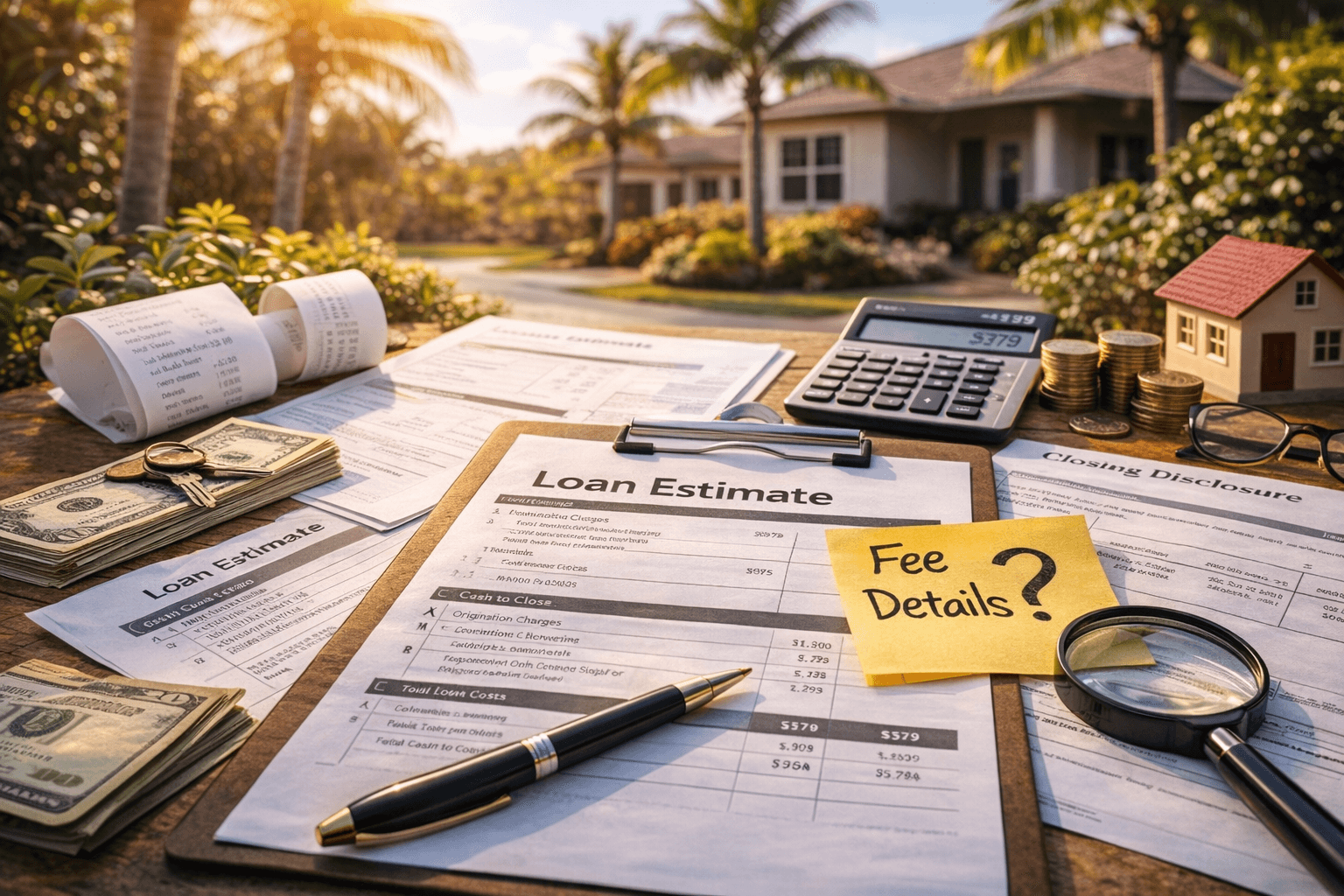
What is a Loan Estimate (and when you get it)?
A Loan Estimate is a standardized form lenders must provide shortly after you apply for a mortgage. It helps you compare lenders using the same layout so you're not guessing.
In Florida, the LE matters because some of your biggest surprises come from:
Homeowners insurance and escrows
Title and settlement fees
HOA/condo costs (not always captured in the LE itself)
Why Florida buyers need to read the LE carefully: Insurance volatility, prepaid escrows, and title fee structures can change your payment by hundreds per month—even when the rate looks identical.
Page 1: The big picture (don't skip this)
1) Loan Terms
Look at:
Loan amount
Interest rate (your note rate)
Monthly principal & interest
Whether prepayment penalty or balloon payment is checked (most buyers want both to say "No")
2) Projected Payments
This is the reality-check section.
If Estimated Taxes, Insurance & Assessments looks low, your payment can jump later.
In Broward, Miami-Dade, and Palm Beach, insurance is often the line that changes the most.
3) Costs at Closing
Focus on two numbers:
Estimated Closing Costs
Estimated Cash to Close
Cash to close is the number that determines whether your deal is comfortable.
For a full cash-to-close breakdown, read How Much Cash Do Florida Buyers Really Need in 2026?.
Page 2: Where most buyers get confused (fees)
A) Origination Charges (lender fees)
This can include underwriting, processing, and other lender fees.
Tip: Compare lenders by looking at the total of A + B (not just one fee).
B) Services You Cannot Shop For
These are typically required services the lender chooses (like appraisal or credit report).
C) Services You Can Shop For
This is where title-related services often live.
Tip: "Can shop for" does not always mean "should shop for" in every contract timeline, but it does mean you can compare.
D) Total Loan Costs
This is A + B + C.
E) Taxes and Other Government Fees
Recording fees and transfer/filing items show up here.
F) Prepaids
This is often where Florida buyers get surprised:
Homeowners insurance (often paid up front)
Prepaid interest
Florida red flag to watch: If homeowners insurance on the LE is far below current market quotes, your payment and cash to close will likely increase before closing.
G) Initial Escrow Payment at Closing
This is your escrow "setup" for insurance and taxes.
If you're unsure why escrows feel high, compare this with your insurance expectations.
H) Other
This can include items like owner's title insurance (varies by transaction structure) or other settlement costs.
In Florida, owner's title insurance is often negotiable depending on who selects the title company, which is why this section varies more than buyers expect.
Want a clean baseline for South Florida closing costs? Use this guide: Average Closing Costs in South Florida: County-by-County Guide.
Page 3: Comparisons + confirmations
Comparisons box
Use it to compare lenders quickly:
5-year total (payments + upfront costs)
APR (not your rate)
Total interest percentage (TIP)
Other Considerations
This is where you confirm:
Whether the rate is locked
Whether the loan is assumable
Whether there are servicing details
Loan Estimate vs. Closing Disclosure (quick clarification)
The LE is an estimate used for comparison. The Closing Disclosure (CD) is the final version issued before closing. Expect changes—but large differences without explanation should be questioned.
The "LE comparison" checklist
When you have two Loan Estimates side by side, ask:
Which LE has lower cash to close (with similar down payment)?
Which LE has lower A + B (core lender fees)?
Are the insurance and escrow numbers realistic for this property?
Did either LE include lender credits, and what trade-off is being made?
Are the title and settlement fees in a reasonable range?
If you're buying a condo, also plan for HOA risk outside the LE. Start here: HOA Fees in Florida: What's Reasonable and What's a Red Flag in 2026.
Next steps
If you want a second set of eyes on your Loan Estimate before you move forward, we can help you compare the numbers in a clear, buyer-first way.
Book a strategy call: Schedule a call
Get pre-approved in minutes: Start your application now
Explore Florida homebuyer programs: You don't need 20% down
EZ Funding Group, Inc. NMLS #349022 | Jaime Charouf NMLS #348964 | Equal Housing Lender