Appraisal Contingency vs Financing Contingency: Florida Contract Basics (2026)
In 2026, Florida buyers protect themselves with contract contingencies that define when they can cancel and get their deposit back. The financing contingency protects you if your loan is not approved by a specific deadline. The appraisal contingency protects you if the home appraises low. They are related, but they are not the same and missing either deadline can put your earnest money at risk.
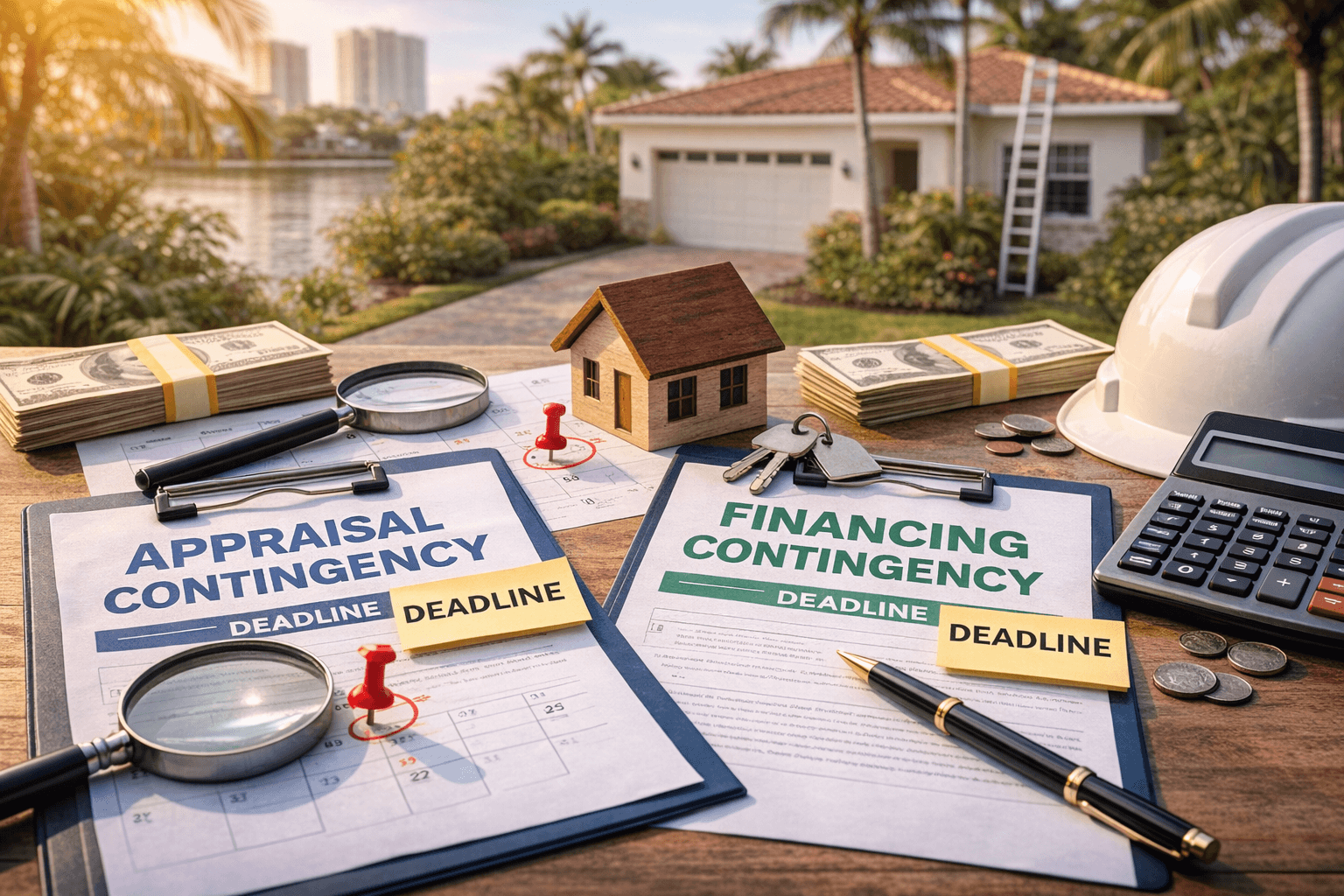
If you're buying in Broward, Miami-Dade, or Palm Beach, these two contingencies often decide whether a "problem" becomes a negotiation, a clean cancellation, or a deposit dispute.
Buyers navigating today's contracts should also understand how competitive offers impact risk and contingencies, which is why it's worth reviewing strategies for competing with cash offers in South Florida before writing an offer.
1) What a "contingency" really means (plain English)
A contingency is a contract "escape hatch" with rules:
A reason you can cancel (financing, appraisal, inspection, etc.)
A deadline you must follow
A notice process (how and when you notify the seller)
If you cancel outside the rules, the seller may claim your deposit. This is why buyers who confuse pre-qualification with true approval often take on more risk than they realize when writing offers, especially in competitive markets where contingencies are pressured.
2) Financing contingency: "Can I get the loan?"
What it covers: Your ability to obtain final loan approval under the terms you applied for (program type, down payment, credit, income documentation, etc.).
This protection matters even more for buyers using low down payment options, since qualifying isn't just about purchase price; it's about the total monthly obligation. Many buyers are surprised to learn how much insurance, taxes, and HOA fees factor into final approval, which is why understanding the true cost of owning a home in South Florida early can prevent financing issues later in the process.
Common Florida triggers that blow up financing:
Underwriting conditions not met (missing documents, unverifiable income)
New debt after approval (car, furniture, credit cards)
Insurance or HOA/condo issues that change eligibility or payment
The lender cannot approve the file by the contract deadline
What it does NOT automatically cover: A low appraisal (unless your financing language ties approval to the appraisal outcome).
Bottom line: Financing contingency protects loan approval, not property value.
3) Appraisal contingency: "Does the value support the price?"
What it covers: If the property appraises below the contract price, the lender bases the loan on the appraised value, not the purchase price. That creates an appraisal gap.
Example: Contract price $500,000. Appraisal $470,000. Gap = $30,000.
Typical outcomes:
Seller reduces price
Buyer brings extra cash
Parties split the difference
Buyer cancels (if protected by appraisal language)
Knowing how to handle this moment is critical, especially in South Florida, where appraisal gaps are still common in competitive areas. If you want a deeper breakdown of negotiation strategies when value comes in low, that guide walks through real-world options buyers use to protect their deposit.
Important: Some Florida contracts handle appraisal risk through negotiation windows instead of a simple "cancel if low" clause. The timeline and wording matter.
Bottom line: Appraisal contingency protects you from paying above market value, or from being forced to bring extra cash.
4) Why buyers get confused: the contingencies overlap in real life
A low appraisal can cause:
A higher required down payment (more cash needed)
A loan approval problem (financing may no longer "work")
But you should not assume a financing contingency automatically protects you from appraisal issues. In 2026, the safest strategy is:
Make sure appraisal risk is addressed directly (appraisal contingency or clear appraisal language).
Make sure your financing contingency deadline is realistic for underwriting.
This is especially important for buyers putting less than 20% down, where even a modest appraisal gap can materially change cash-to-close.
5) The deadline mistake that costs buyers the most
Most deposit disputes aren't about "bad faith." They come from missed timelines:
Buyer waits too long to submit documents
Appraisal comes in low near the deadline
Buyer negotiates verbally, but does not deliver written notice on time
Financing deadline expires while "waiting to see what happens"
Insurance delays are a common culprit here in Florida. If coverage comes in higher than expected, or is difficult to place, the loan may stall right as deadlines approach, which is why understanding Florida home insurance requirements in 2026 matters even before appraisal is ordered.
Rule of thumb: Treat deadlines like a countdown clock. If you want to cancel, do it within the protection window and in the required format.
Red flag: If anyone tells you "don't worry, financing covers that," ask which deadline and which clause protects you, then confirm it in writing.
6) How to protect yourself (simple checklist)
Before you sign:
Confirm you understand your financing contingency and its exact deadline.
Confirm whether you have appraisal protection, and what happens if value is low.
Ask your lender what items could delay approval (income type, condo docs, insurance requirements).
Don't waive protections to "win" unless you fully understand the risk, especially in buildings with HOA or condo approval requirements that can affect loan eligibility.
After you're under contract:
Submit documents immediately.
Avoid job changes and new debt.
Track the appraisal order date and expected delivery date.
Put negotiation outcomes in writing, not texts.
Final takeaway
In 2026, Florida buyers don't just need a strong offer. They need clean contract protections. Financing and appraisal contingencies solve different problems, with different deadlines. If you know which contingency applies, and act within the timeline, you protect your deal and your deposit.
Contract language and timelines vary by form and transaction. Always review your specific agreement with your agent and lender before relying on a contingency.
Next steps
If you're buying in Florida and want help understanding how these contingencies protect you (before you sign anything):
Book a strategy call: Review your contract timelines before deadlines put your deposit at risk
Get pre-approved in minutes: Start your application now
Explore Florida homebuyer programs: Learn about low-down-payment and first-time buyer options
EZ Funding Group, Inc. NMLS #349022 | Jaime Charouf NMLS #348964 | Equal Housing Lender