Florida Homestead Exemption: How It Works and When You Actually See Savings (2026)
Florida's homestead exemption can reduce your taxable property value by up to $50,000, but savings don't start until the year after you file. You must file by March 1 to qualify for that tax year, and the home must be your primary residence. For buyers in Broward, Miami-Dade, and Palm Beach, this benefit grows over time thanks to the Save Our Homes cap, which limits how much your assessed value can increase each year.
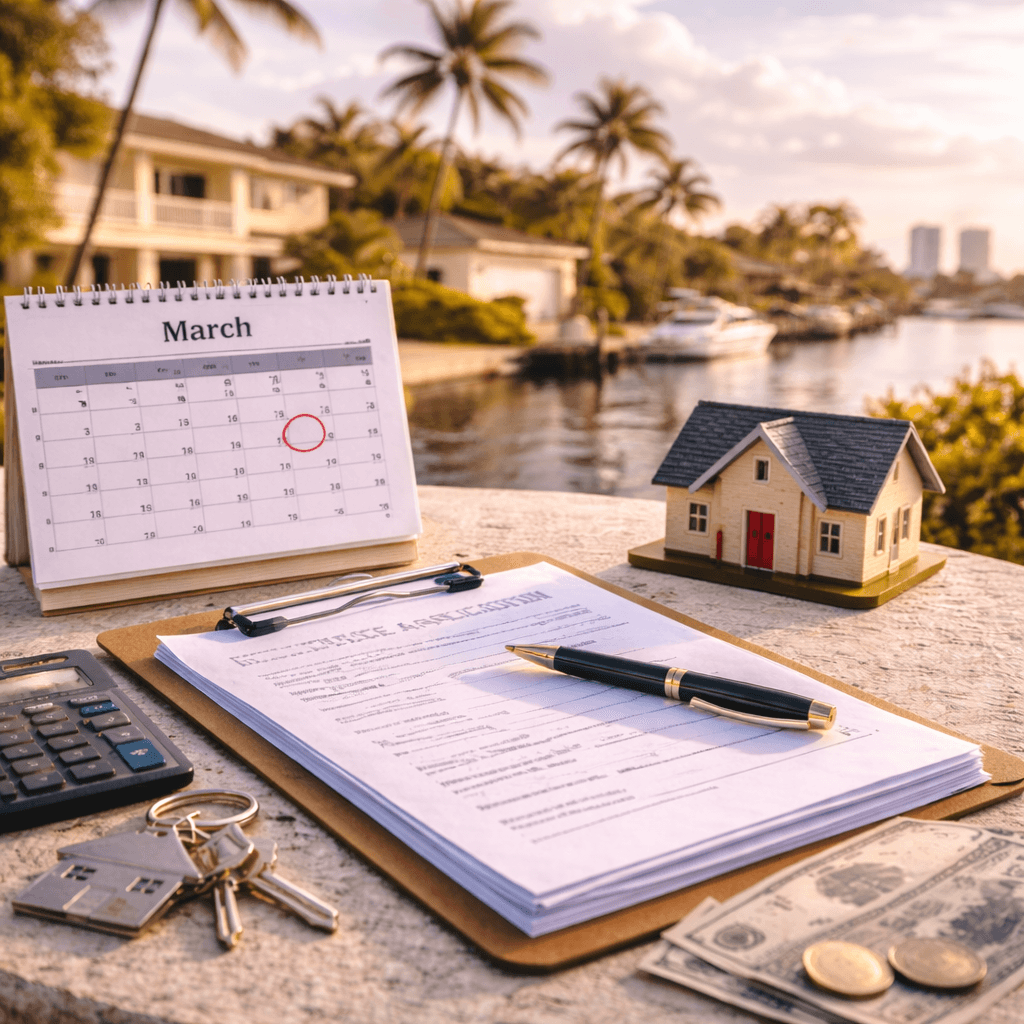
Understanding when you'll see real savings and when you won't helps you budget correctly before and after closing.
1) What the Florida homestead exemption actually does
The homestead exemption reduces the assessed value of your primary residence for property tax purposes.
Here's the breakdown:
First $25,000 exemption: Applies to all property taxes (including school taxes)
Second $25,000 exemption: Applies to non-school taxes only
Example:
Home assessed at $400,000
After full homestead exemption: $350,000 taxable for school taxes; even lower for non-school taxes
Result: Lower annual property tax bill
What $50,000 of Homestead Exemption Actually Saves
Example millage rate: 1.2%
$50,000 × 1.2% = ~$600/year in savings
Plus: Save Our Homes limits future increases. This is where long-term savings compound.
This is separate from (but related to) understanding how property taxes work in South Florida before closing, which is essential for budgeting your true monthly payment.
2) When homestead exemption helps (and when it doesn't)
It helps when:
You're buying a primary residence in Florida
You plan to live there long-term (the longer you stay, the more you save)
You want protection from property tax spikes via the Save Our Homes cap
It doesn't help when:
The home is not your primary residence (investment properties, second homes, vacation rentals don't qualify)
You're only living there temporarily
You haven't filed by the March 1 deadline for the current tax year
Critical point: Many first-time buyers assume the homestead exemption applies immediately at closing. It doesn't. If you close in June 2026, your homestead exemption won't reduce your taxes until the 2027 tax year.
3) The filing process (simpler than most buyers expect)
To claim your homestead exemption:
Step 1: Become the legal owner and establish the property as your primary residence
Step 2: File with your county property appraiser's office by March 1 of the year you want the exemption to apply
Step 3: Provide proof:
Florida driver's license or ID card with the property address
Vehicle registration showing the property address
Voter registration (if applicable)
Most counties allow online filing, making the process quick and straightforward.
Pro tip: File as soon as possible after closing. Even if you close in December, you can file for the following year's exemption right away.
4) When you'll actually see savings (the timeline)
Here's the reality of homestead exemption timing:
Scenario A: You close in January 2026
You file for homestead exemption by March 1, 2026
Your exemption applies to your 2026 tax bill (paid in late 2026/early 2027)
First savings: Late 2026
Scenario B: You close in June 2026
You file for homestead exemption by March 1, 2027
Your exemption applies to your 2027 tax bill (paid in late 2027/early 2028)
First savings: Late 2027
Important: You'll pay the 2026 tax bill without homestead protection
Scenario C: You miss the March 1 deadline
You must wait until the following year to file
You lose a full year of savings
Note on escrow: Even after homestead applies, your lender may adjust your monthly payment the following year when the escrow account is recalculated.
This is why understanding the true cost of owning a home in South Florida means planning for taxes, insurance, and HOA, not just your mortgage payment.
5) Save Our Homes cap: where long-term value really builds
Once you have homestead exemption, the Save Our Homes cap protects you from dramatic tax increases.
How it works:
Your assessed value can only increase by 3% per year or the CPI increase, whichever is lower
Even if your home's market value jumps 20%, your taxable value rises slowly
Real-world example:
You buy in 2026 for $450,000
By 2030, the market value is $550,000
Thanks to Save Our Homes, your assessed value (what you're taxed on) might only be around $505,000–$510,000, not the full $550,000
This is why sellers often have much lower tax bills than what new buyers will pay.
If you're comparing homes and trying to understand the real monthly cost, remember that insurance can vary just as much as taxes. Many buyers are surprised by how much they need to budget for Florida home insurance in 2026.
6) Portability: moving your homestead benefit within Florida
If you already own a Florida home with homestead exemption and you're buying another primary residence in Florida, you may be able to transfer (or "port") some of your Save Our Homes benefit.
How portability works:
File for portability when you apply for homestead exemption on your new home
You typically have two years from the date you abandon your old homestead to transfer the benefit
The benefit amount you can transfer is capped, but it can still save you thousands annually
Example: If your old home had $100,000 in Save Our Homes protection, you might be able to transfer a portion of that to your new home, reducing your starting assessed value.
7) Common mistakes that cost buyers money
Mistake #1: Not filing by March 1
Cost: One full year of lost savings
Fix: Mark the deadline on your calendar and file as soon as you close
Mistake #2: Assuming homestead starts at closing
Cost: Budgeting incorrectly for your first year of taxes
Fix: Plan for higher taxes in year one, lower taxes starting year two
Mistake #3: Not updating your driver's license address
Cost: Homestead application may be rejected
Fix: Update your address within 30 days of closing
Mistake #4: Forgetting portability when moving within Florida
Cost: Thousands in unnecessary property taxes
Fix: Ask your county property appraiser about portability when you file
If you're working with a local lender who understands your area, they'll often remind you about these deadlines before they become problems. This is one reason getting properly pre-approved matters more than many buyers realize.
FAQ: Florida Homestead Exemption
Does homestead exemption lower my mortgage payment?
Not directly. It lowers your property tax bill, which can reduce your escrow payment if your taxes are escrowed. Your lender will recalculate your escrow annually.
Can I file if I work out of state?
Yes, as long as the Florida home is your primary residence where you spend most of your time and maintain legal residence (driver's license, voter registration, etc.).
What happens if I rent out the home later?
You lose homestead exemption. It only applies while the home is your primary residence. You must notify your county property appraiser if you move out or rent the property.
Is homestead automatic in Florida?
No. You must file an application with your local county property appraiser by March 1 to receive the exemption.
Final takeaway
The Florida homestead exemption is one of the best long-term benefits of homeownership in Broward, Miami-Dade, and Palm Beach—but only if you file on time and plan for the savings timeline correctly.
Most first-time buyers in Miramar, Pembroke Pines, Hollywood, and Weston benefit significantly after year one, especially as the Save Our Homes cap protects them from market-driven tax spikes.
File early, plan for year-one taxes without the exemption, and enjoy the savings that build over time.
Next steps
If you're buying in Broward, Miami-Dade, or Palm Beach and want to understand how homestead exemption fits into your real monthly payment:
Get pre-approved in minutes: Start your application now
Explore Florida homebuyer programs: Learn about low-down-payment and first-time buyer options
Book a strategy call: Schedule a call to review your plan and avoid costly mistakes
EZ Funding Group, Inc. NMLS #349022 | Jaime Charouf NMLS #348964 | Equal Housing Lender