Insurance Shopping Timeline: When to Start So It Doesn't Delay Closing (2026)
In 2026, Florida buyers should start insurance planning before writing an offer and secure quotes within 48 hours of going under contract. Insurance is one of the most common closing delays in Broward, Miami-Dade, and Palm Beach not because buyers forget about it, but because they start too late. Underwriting requires inspections, roof documentation, and carrier approval, all of which take time. A clear timeline protects your closing date and your loan approval.
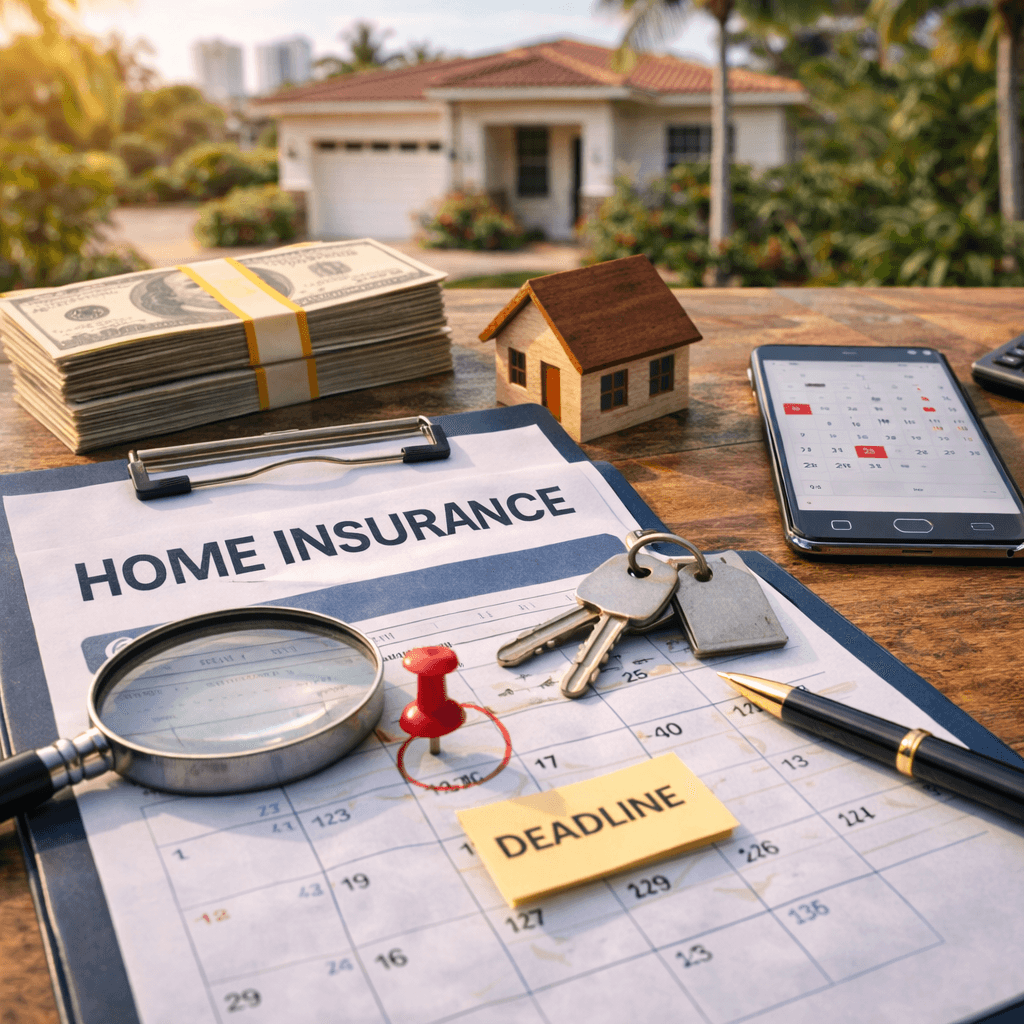
If you're buying in Miramar, Pembroke Pines, Hollywood, or Weston, treat insurance as a critical contract milestone, not a week-of-closing afterthought.
At-a-glance timeline:
Before offer → Scenario quotes
Day 1–2 → Formal quotes + inspections
Day 3–7 → Underwriting responses
Day 8–14 → Lock carrier
Final week → Binder to lender
Phase 1: Before You Write an Offer (7–14 Days Out)
Goal: Know if the home is insurable and affordable
What to do:
Ask your loan officer what insurance estimate was used in your pre-approval
Research the property basics:
Year built
Roof age and type
Recent updates (electrical, plumbing, HVAC)
Flood zone status
HOA/condo or single-family
Get scenario quotes for similar homes in the area
Why this matters:
Two nearly identical homes can produce wildly different insurance outcomes. A 20-year-old roof vs. a 5-year-old roof can mean the difference between affordable coverage and a policy that requires immediate replacement.
Understanding why Florida home insurance is so high and how it affects your monthly payment before you're emotionally committed helps you shop smarter.
Takeaway: Insurance planning starts before you tour, not after you're under contract.
Phase 2: Days 1–2 After Contract (Immediate Action Window)
Goal: Start the underwriting clock before inspections
What to do:
Request 2–3 insurance quotes immediately
Share your exact closing date with each agent
Schedule inspections if the home likely needs them:
4-point inspection (roof, electrical, plumbing, HVAC)
Wind mitigation inspection (for premium discounts)
Provide complete property details to insurers
Why this matters:
Most insurance delays happen because buyers treat insurance like a "later" task. Starting on Day 1 gives you time to handle underwriting requests, compare quotes, and pivot if a carrier declines coverage.
Many buyers don't realize how much planning around Florida home insurance costs can protect both their budget and their closing timeline.
Takeaway: The first 48 hours set the pace for everything that follows.
If you want help estimating insurance before you write an offer, a quick pre-approval review can reveal whether a home fits your budget beyond the purchase price.
Phase 3: Days 3–7 (Response and Documentation Phase)
Goal: Handle underwriting requests without delay
What to expect:
Insurers will request:
Roof documentation (permits, age verification, recent photos)
Inspection reports (4-point, wind mitigation)
Prior claims history (CLUE report)
Electrical or plumbing update verification
What to do:
Respond to requests same day or next day
If one insurer is slow or declines, move to your backup immediately
Confirm what documents your lender needs and when
Why this matters:
Underwriting bottlenecks kill more deals than most buyers realize, especially when inspection reports arrive late or a carrier suddenly declines coverage. Fast responses keep the process moving and give you options if a carrier backs out.
Takeaway: Treat insurance underwriting like loan underwriting: urgent and time-sensitive.
From a lender's perspective, insurance delays are one of the most preventable reasons closings get pushed; when buyers follow a clear timeline, approvals move faster.
Phase 4: Days 8–14 (Lock In Your Coverage)
Goal: Confirm the carrier, premium, and policy terms
What to do:
Lock in your preferred carrier and coverage level
Confirm when the policy can be bound (officially issued)
Ask your lender:
What insurance documents are required?
When do they need them?
Will insurance be escrowed monthly or paid annually?
Verify flood insurance requirements if applicable
Why this matters:
This is where buyers often discover that the true cost of owning a home in South Florida is higher than expected once insurance and escrow are factored in. Confirming details now prevents last-minute payment shock.
Takeaway: "I think I have insurance" is not the same as "My policy is bound and my lender has the documents."
Phase 5: Final Week Before Closing (Delivery and Verification)
Goal: Deliver final documents so underwriting clears
What to do:
Bind the policy if not already done
Send the insurance binder or declarations page to your lender immediately
Double-check:
Correct named insured (your name, spelled correctly)
Exact property address
Correct mortgagee clause (lender's info)
Proper effective date (usually closing date or day before)
Common last-week mistake:
Small paperwork errors (wrong address, misspelled name, incorrect lender info) that trigger re-review and delay funding.
Takeaway: Triple-check every detail before you send it.
Red Flags: Start Even Earlier If You See These
If any of these apply, start insurance shopping as soon as you have an address:
Roof older than 15 years or missing permits
Aging electrical (aluminum wiring, fuse box, knob-and-tube)
Aging plumbing (polybutylene, galvanized, cast iron)
Prior water damage or mold remediation
Condo with complex master policy or reserve issues
Flood zone uncertainty or high-risk coastal location
These issues often overlap with financing challenges. Buyers should understand whether a condo is mortgage-eligible before assuming insurance will be straightforward.
Final Takeaway
In 2026, insurance is not a "week-of-closing" task. It's a contract timeline item that affects affordability, loan approval, and closing dates. Buyers who treat insurance like a milestone, not an afterthought, protect their deals long before closing week.
For buyers in Miramar, Pembroke Pines, Hollywood, Weston, and across Broward, Miami-Dade, and Palm Beach, this timeline is the difference between a smooth closing and a delayed one.
Frequently Asked Questions
How early should I start insurance quotes in Florida?
Start scenario quotes 7–14 days before writing an offer. Once under contract, request formal quotes within 48 hours.
Do I need flood insurance before closing?
If your home is in a FEMA high-risk flood zone and you're using a mortgage, flood insurance is typically required before closing. Check your flood zone early.
What happens if I can't get insurance before closing?
Your lender cannot fund your loan without proof of insurance. If coverage can't be secured, your closing will be delayed or the deal may fall through.
Should real estate agents help buyers start insurance early?
Yes—early insurance planning protects contract timelines and prevents last-minute renegotiations or extensions.
Next Steps
If you want help running insurance scenarios before you write an offer, or if you need to understand how insurance fits into your total monthly payment:
Get pre-approved in minutes: Start your application now
Explore Florida homebuyer programs: Learn about low-down-payment and first-time buyer options
Book a strategy call: Schedule a call to review your plan and avoid costly mistakes
EZ Funding Group, Inc. NMLS #349022 | Jaime Charouf NMLS #348964 | Equal Housing Lender