Earnest Money in Florida (2026): How Much Is Typical, Deadlines That Matter, and When You Can Lose It
In 2026, earnest money in Florida typically ranges from 1% to 3% of the purchase price (sometimes higher in competitive markets). You risk losing it when you miss a contract deadline or cancel outside your contingency protections. The best way to protect your deposit is to understand your inspection, appraisal, and financing deadlines and work closely with your lender and agent before signing.
1) What is earnest money (and where does it go)?
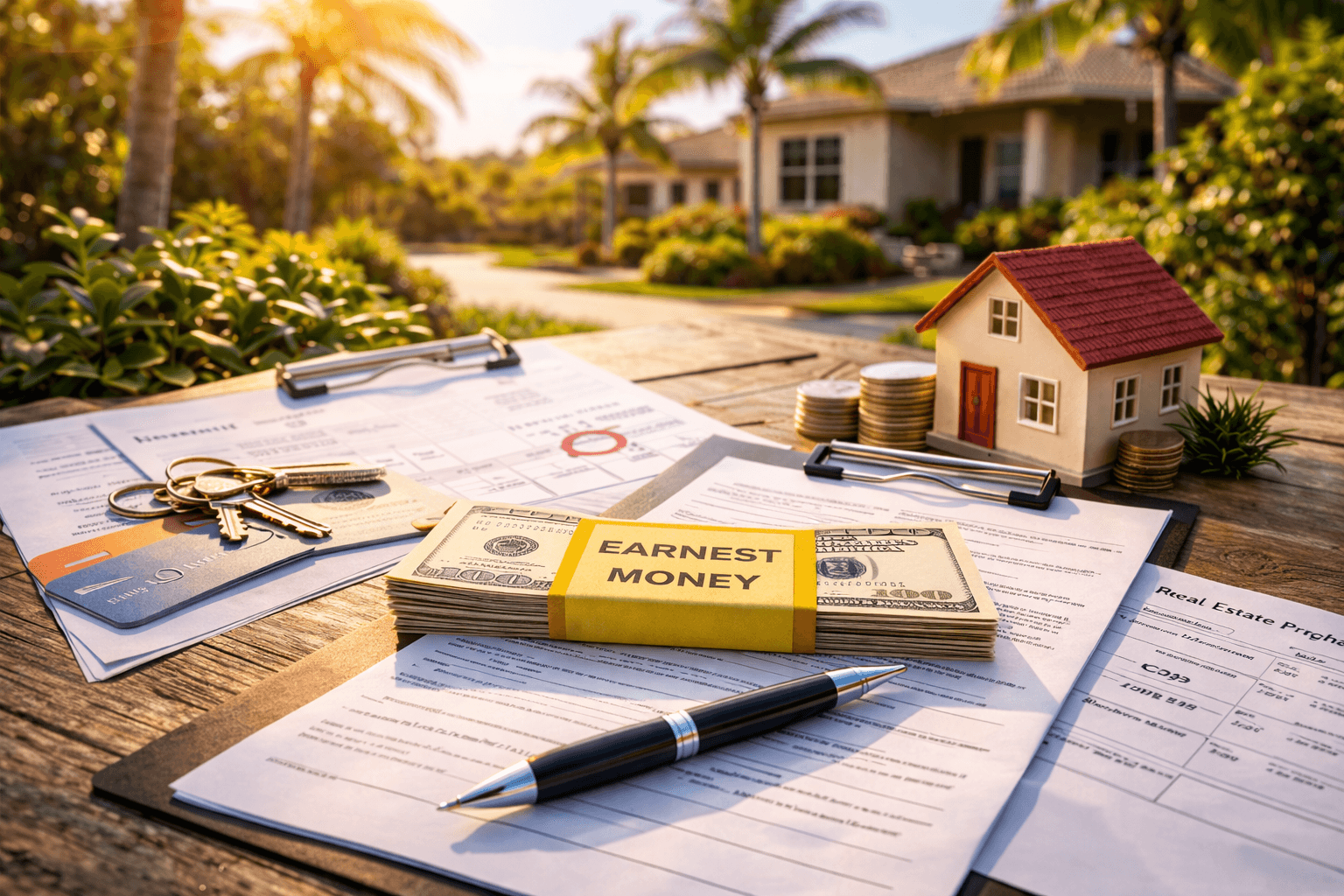
Earnest money is a deposit you submit after your offer is accepted to demonstrate your commitment to the purchase. In Florida transactions, it's typically held in escrow by the title company or real estate broker and credited toward your closing costs at settlement.
If you want a realistic view of what your total cash at closing includes, see our breakdown of average closing costs in South Florida.
2) How much earnest money is typical in Florida in 2026?
There's no fixed amount, but here are the common ranges we see across Broward, Miami-Dade, and Palm Beach counties:
1% of purchase price: Common in balanced markets or when the buyer's offer is already competitive.
2%–3%: Standard when multiple offers exist or the seller requests stronger commitment.
Above 3%: Used in highly competitive situations or unique contract structures.
Key point: A larger deposit strengthens your offer but increases your financial risk if the transaction falls through.
3) Quick FAQ: Earnest money in Florida
How long do I have to deposit earnest money in Florida?
Most contracts require the deposit within 3–5 business days after acceptance but always confirm your specific contract timeline.
Is earnest money refundable in Florida?
Yes — if you cancel within your inspection, financing, or appraisal contingencies and follow the contract rules.
Who holds the earnest money?
Usually a title company, real estate broker, or escrow agent.
4) When you can lose earnest money (the 3 most common scenarios)
Scenario 1: Canceling after the inspection period expires
Your inspection period provides critical protection. If you attempt to cancel after this window closes without another valid contingency, the seller may be entitled to retain your deposit.
Avoid inspection-related issues by following this guide: 10 Mistakes First-Time Buyers Make in South Florida (And How to Avoid Them).
Scenario 2: Missing financing deadlines or losing qualification
If you're financing your purchase, your contract includes specific financing contingency deadlines. Common problems include:
Submitting loan applications too late
Changing employment or incurring new debt during the transaction
Failing to account for Florida-specific costs like homeowners insurance and HOA fees
To prevent financing surprises, especially around documentation and timing, understand the difference between pre-qualification and pre-approval in South Florida.
Scenario 3: Low appraisal without a protection strategy
A low appraisal creates an "appraisal gap." Without proper contract language or timely renegotiation, your deposit may be at risk if you cannot proceed.
Learn how to handle this situation: How to Protect Your Deal If Your Florida Home Appraises Low.
5) Earnest money vs. "cash to close" (understanding the difference)
Earnest money is one component of your total cash requirement. Florida buyers must also budget for:
Down payment
Closing costs (title, legal, recording fees)
Inspection and appraisal fees
Prepaids and escrows (insurance premiums and property taxes)
For a comprehensive 2026 cash planning guide, visit: How Much Cash Do Florida Buyers Really Need in 2026? (Real Cash-to-Close Breakdown for South Florida).
6) How to protect your deposit (pre-contract checklist)
Use this checklist before signing your purchase agreement:
Verify all contract deadlines. Confirm inspection periods, financing contingency dates, and closing timeline.
Start the lending process immediately. Submit all requested documents promptly and respond to underwriter conditions quickly.
Address insurance and HOA requirements early. South Florida insurance markets and condominium association rules can significantly impact transactions.
Insurance guidance: Florida Home Insurance in 2026: What Buyers Must Budget For
HOA due diligence: HOA Fees in Florida: What's Reasonable and What's a Red Flag in 2026
Maintain your credit profile. Avoid new vehicle purchases, credit card applications, or major purchases during escrow.
Document all negotiations in writing. Ensure repair requests, price adjustments, or credits are formally added to the contract.
Final takeaway
In 2026, protecting your earnest money in Florida requires proactive timeline management rather than reactive problem-solving. Execute inspections, secure financing, complete appraisals, verify insurance availability, and review HOA documentation early in the contract period.
In our South Florida transactions, most earnest money disputes we see come from missed inspection or financing timelines — not bad intentions.
Next steps
If you're buying in Miramar, Pembroke Pines, Hollywood, Weston, or anywhere in Broward, Miami-Dade, or Palm Beach counties, we can help you structure a strong offer without risking unnecessary deposit exposure.
Get pre-approved in minutes: Start your application now
Explore Florida homebuyer programs: You don't need 20% down
Schedule a strategy consultation: Book a call
EZ Funding Group, Inc. NMLS #349022 | Jaime Charouf NMLS #348964 | Equal Housing Lender